And welcome to today's webinar, the new era of food safety documentation audit readiness with AI. I'm Lilia Rivera, product senior manager here at TrustWell. And I am joined here by my colleague, Zoe Richards, business solutions director. Here's what we'll cover today. We're gonna be looking at the current challenges, facing food companies. We're gonna see a high level overview of the pressures, documentation expectations, and audit readiness, realities teams are navigating today. We're gonna look at why this matters why this matters now. Why GFSI related documentation readiness is increasingly important for FSQA teams and business leaders alike, why Playbook was built, how Playbook uses AI trained on GFSI scheme to understand which documentation is required based on the user's selected standards, facility profile, products, and op operating context. And we're gonna look at the Playbook in action, a concise product demonstration showing both key capabilities and, more importantly, the how those capabilities address the challenges discussed earlier. We're gonna have some q and a towards the end, a quick discussion for any questions that come up during the demo. And we'll spend most of today grounding the conversation in realities good companies are facing, then use the demo to show how Playbook supports those needs in a practical workflow. Fun fact, that background of binders is my old office. I used to be very, very proud of all of my binders, but they used to make me very frustrated. So that is why we're here today. Amazing. And I'll take it from here, Lilia. And I think there'll be some people on the call today that are having that same anxiety looking at your picture. I know I certainly did when I first saw it. But as Lillia said, I'm sorry. And I just want to kind of give you a little bit of context for why Triswell. Firstly, it's holding this webinar and the challenges that we understand and sort of give you a bit of context around why playbook, we believe playbook is incredibly important. And that context has come from, you know, the last few years, the opportunity that I have had to speak with food businesses of every size from manufacturers with single production sites to global organizations, managing hundreds of suppliers and multiple certification schemes. And regardless of their size, one thing has become incredibly clear, that food safety isn't more difficult today because we've forgotten how to do it and how to produce safe food. It's become more difficult because the environment around us has changed. So I'd like to start with a simple question. So those of you that have joined us, if one of your largest customers called you today and asked if they could bring their audit forward to next week, what would your first reaction be? Would it be, yay, bring it on, can't wait? Or would it be something a little bit more stress inducing? Maybe some, oh, what are we gonna do next kind of comments. Because I suspect for a lot of people, those kind of changes or even those that are scheduled and have been in the in the diary for a while can be very stressful auditing, and making sure you're ready and, prepared for that audit. And it's not because you don't have the documentation. It's not because you don't have experienced people, but maintaining that accurate up to date picture of of an evolving food safety management system has become more hard harder than it's ever done before. So that that's why we're here today, Not just to create, not just to talk about creating more documents, but to explore how organizations can build and maintain continuous audit readiness in a world where change has become the only constant. So it's not about stock documents today. It's something much more important. And, what we wanna do just to start with is really kind of delve into some of those reasons why that, why things are becoming increasingly more complex and difficult for, food professionals to manage. And and that is really down to the pace of change that we are seeing and experiencing. Our businesses are moving faster than ever before. If you were to think about your own business, just in the last twelve months, you know, have you had new customers come in with new requirements? Has any regulations changed? Have you onboarded new suppliers? And as a result of that, just need to assess, you know, risk assessments and documentation associated with that. Have you launched new products or reformulated existing ones? And any packaging changes that may have come with that? Or even, those of you luckiest luckier among us who are growing that need new production lines, that need new sites, what sort of documentation requirements has that brought with it? Because every one of those changes creates a ripple effect across your whole system, and every change comes with another review, another approval, and another piece of evidence to maintain. So, the other thing to talk about is the volume of audits that I think the industry has experienced today. And I often, in my compliance discussions, talk to our clients about how many do you often manage in a typical year? And usually the answer is much higher than they first expect. Normally they start with their GFSI audits, and that's pretty easy to sort of put a number on. But then they start to think about customer audits, retailer visits, internal audits, supplier audits. And before long, they're describing an organization that essentially is operating almost continuously in audit mode. And then that is an important distinction to make because the audit itself could take a couple of days, but we know that the real work starts long before the auditor arrives and continues after they've left. And then, you know, another challenge that we don't often talk about, sorry, if we just go back to the previous slide. Thank you. One challenge we don't often talk about is the loss of that organisational knowledge. So those food safety systems that are built on years of experience, decisions and continuous improvement, but too often that knowledge sits with individuals rather than within the system itself. So when experienced people retire, they move roles or they leave the business, they take with them that understanding of why procedures were written in a certain way, why risks were assessed in a particular manner, or where that critical evidence is stored. And at the same time, that information becomes fragmented across shared drives, emails, spreadsheets and disconnected systems. And the result of that is that those organizations don't lose, don't just lose that knowledge, but they lose visibility. So, they spend time, valuable time searching for information, validating versions, reconnecting the dots rather than focusing on improving food safety. And as I say, in an industry where constant when constant change is happening, we need to preserve that knowledge and connect that information to make sure that that is all working for us and not causing us more problems. So, the environment that food safety teams are operating in looks like this. What does it actually mean sort of day to day? And and so let's look at the practical impact. And if we, just move on a a slide. So as we said, businesses are changing faster than ever. It means managing far more than a collection of documents. It means maintaining that entire compliance ecosystem. So that's procedures, HACCP plans, risk assessment, supplier records, internal audit evidence, corrective actions. It's huge. Every one of those has to remain accurate, has to be current, and available when it's needed. And the effort that then goes into keeping that aligned is significant, Because every update then needs to be reviewed. That approval needs to be tracked. Because every change has the impact or the potential to impact something else. So, before long, highly skilled technical and quality professionals are spending more time managing information than improving food safety. And that's what we are hoping to prevent. So, let's look at this a bit differently. So, when this becomes an opportunity cost for the business, so we're talking about technical managers who, you know, they rarely tell me they need more work. They tell me they need more time. Time to strengthen their supplier relationships, time to improve their food safety culture, time to analyze trends, and coach people on the on the factory floor. Yet, so much of that time disappears into searching and checking and validating and coordinating that information. So I'd just like to launch a quick poll, if I may, where I'd love to ask for your experience in terms of how much time do you typically spend preparing for a food safety order? Okay. That's interesting. Really kind of broad spectrum here. Nobody's gone for less than one week though, so far. Interesting. So you're on the right call, everybody. So let's see if we can help with that. So, yeah, really interesting results actually because even for those that, you know, I suppose in terms of that continuous preparedness that you guys all all need to sort of be in. You know, that's that's obviously a bit of a brain drain, isn't it? And it's a lot to deal with. And that's what I think is probably one of those hidden costs of compliance. So it's not simply the hours spent preparing for those audits, but the hours lost every week maintaining that information that already exists. And and that time could be better spent reducing risk, rather than administering it. So we talked about why the workload continues to grow. The obvious question there, is it just the experiences that that me and our team here and that sort of anecdotal information, or is this a wider industry issue and and and we're seeing that elsewhere? So if we just go to the next slide, I think you'll find, you know, this particularly interesting because the answer is yes. Every year organizations such as BRC, GS, SQF and IFS, they publish guidance and audit trend reports based on thousands of certification audits across the feed industry. So, each scheme reports it's finding slightly differently, The overall picture is remarkably consistent. So those same themes continue to appear, internal audits, document control, HACCP, corrective actions. So, you know, it's quite I'm sure, lots of you on the call today are probably seeing some some things here that you perhaps see in your audit reports, and you and you're kind of wondering, you know, what do I need to do to manage this better, or how how do I get more efficient in some of these areas? And and because actually, I think there's probably, a bit of a theme here across some of these areas where they don't exist in isolation. So it takes something as simple as onboarding a new supplier, one operational change, but it has multiple compliance implications. So I don't actually see these eight separate audit findings on this side. I sort of see one underlying challenge here. And they're really highlighting where today's compliance processes are under the greatest pressure. And naturally, I suppose that raises another question. If we know where the pressure points are, why do they continue to happen? So, let's have a look at how most organizations manage those processes today. Imagine it's I was going to say Monday morning, but it's Wednesday morning. You've just received a call from one of your largest customers. They brought their audit forward, as we've just said. And immediately that work begins. And so someone has to start gathering procedures, checking the latest HACCP review. Another person brings supply documentation to the table, all your outstanding actions are reviewed, all those shared drives are open, spreadsheets are updated. And you can see here how, you know, you're having to collate so much information before even the first question is asked by that auditor, because you spent hours trying to understand your current position. And what's also interesting, my background in the feed industry, I, you know, I really believe in this is that, you know, very few organizations measure this work. We measure the audit score, we measure the non conformances, we measure supplier performance, but we rarely measure the time spent trying to find information, checking the versions, validating the evidence, and making sure everybody's working from the same understanding. So that time issue is real. So, I think for years we've thought about where do we store our documentation. Maybe the better question is, you know, how do we maintain visibility across a food safety management system that's constantly changing? And when you start looking at it through that lens, the conversation changes. It stops becoming about document storage and become and starts becoming around visibility, consistency and governance. And that consistent sorry, that continuous audit readiness. And that's the exact challenge that Playbook was designed to address. So we've been talking about today a lot of documentation and but that's not the problem. The problem, as I've said, is visibility. Visibility into what's current, what's changed, and what needs attention. And that's where Playbook changes the conversation. Instead of treating documentation as a collection of files, it treats it as part of a living food safety management system by bringing together your documentation, recognize audit standards. And with that AI powered review, it helps you to spend less time searching for information and updating it and more time strengthening that compliance before the next audit. So at TrustWell, we believe technology should do more than store information. It should help food safety professionals understand it. So we built Playbook to do just that. And you can see here on the screen just some of the things that we talked about in terms of the challenges. But then, you know, what we've then done with our Playbook product to help, you know, to solve some of those challenges. And you'll see, Lilia will will guide you through the demonstration in a moment, but looking at various different standards that we're all trying to work towards, showing you with the, gap analysis AI sort of where you can focus, where you need to enhance, your documentation to be more compliant, what opportunities there are there. You can create documents faster. We're gonna show you that scan. It's really exciting. But having that consistency across multiple lines, multiple facilities, and and standardizing and organizing that information. So we'll also be able to show you your readiness score because I think that's the word we use a lot in the industry as being, you know, your audit readiness. But could you put a number to that? And what's really exciting is today, we'll be able to show you how you can do that. So, I'm going to hand over to Lilia. I'm really excited about this. We've spoken about this a lot between us, and I think this is a real opportunity for the industry to make some real inroads in in sort of managing all that complexity. So I'm really looking forward to this, and I I hand it over to you, Lilia. Thank you. Thank you, Sally. And, you know, the the way that you've you've put it makes makes total sense. It's not just about the the work that needs to get done, but it's the time that it takes us to get it done. When I was a product, food safety manager, in a few interviews, I was asked what was the least, the the the thing that I liked the least about my job. And my my answer was always the same. It's building HACCP plans. Like, I very much disliked all of the time that went into it when I knew that I was, I would be spending better, time, on the floor, right, than being with my team and actually seeing the product moving through the lines. So I was actually one of the reasons why I left food safety as a food safety manager and joined TrustWell to be able to really build those products that will help our food safety managers and food safety and quality assurance people, in our whole supply chain really get to to products that will help their lives and help their day to day so that they can be, you know, more focused on the product itself. Zoe mentioned audit readiness. That is one thing that we will take a look at right as we go into Playbook. You know, you are getting ready for an audit that is coming in, and you get asked is, like, are you ready for your audit? I I never was able to really, like, fully say with complete certainty. It's, like, at least on on my on my audit desk audit side. Right? Yes. I am a hundred percent ready. I did go through every single document. I checked every single thing. Has all of it been, you know, done, reviewed, signed off? Yes. But, you know, am I a hundred percent sure that I am I ready for tomorrow's audit? That is one of the things that we wanted to really put a number to so that you can truly say it's like, yes. You know, between is my document completely covering everything that the scheme is requiring? Is it actually complete? Has it been reviewed? Is it has it been reviewed within the last three hundred and sixty five days or however amount of time you want or need for it to be reviewed? And which documents is it that I'm going to be requiring for my audit readiness? How am I going to be determining what my audit readiness is? So this will be one of the main areas of Playbook. And then how Playbook helps your FSQI program. So we'll look at, you know, all of the required documents. We'll look at manuals, so not just each document separately, but, you know, as we saw in in that picture of of my office, there were some specific binders, specific manuals that were all within the same theme. We'll look at how those manuals are also built within Playbook. And then, you know, being able to have multiple people contribute to these documents. We have an awesome chat feature that we have within the document as well, and we'll take a look at it. And we will also look at, you know, the the current documents that you have. Right? So you have all of these. You don't have to start from scratch. You don't have to start, you know, from a blank page. We can pull in all these documents and have AI analyze them and understand if they are actually audit readiness audit ready. Because, you know, one of the things that are also difficult, if if you're starting a facility from scratch or if you're starting a business from scratch, it's sitting in front of a blank word document and saying, like, okay. I need to start writing, drafting all of these documents. So with that, we will go into Playbook. I wanna go ahead and start sharing my screen. cream? So we're seeing this audit readiness score. Audit readiness right now for this specific facility, which is the Cub House. If you've been on other demos of mine before, you know that Tropic Foods and the Cub House is one of my main suppliers. So we're looking at a Cub House of a produce facility, and we see their audit readiness form. Let's go ahead and take a look take a deeper dive into it. So what as we mentioned, you can see coverage completeness and freshness. This is about how complete is the document, how complete are the documents, are they covering everything that they need to cover with GFSI, the completeness, have I gotten them to, you know, completed and ready to be presented or used, or are they just in a in progress mode? And how often is it that I have reviewed them? I can select multiple different documents. So for example, let's let's say, very much for demo purposes, that we don't want prerequisite programs. I can come in here and remove them. I can see a live view of what my audit readiness looks like when I remove them. I do want prerequisite programs, so I'm gonna keep that on. We can also see those weighed scores. So you can actually determine what your audit readiness looks like. Maybe it is more important for me that my documents are a hundred percent completed. They are out of draft, than they are, out of that in progress mode. So if if it were to be that case, I'm really, really not ready. But because I've already started working on some of these, I can see that my my audit readiness could be a little bit closer to that one hundred percent. We've made sure to go in here and add as many as many schemes as possible and document types as possible. We will continue adding more, with time. I'm gonna go ahead and save this and go back to my dashboard. So the dashboard will continue giving us more information about this facility. We can also add additional facilities. You can see here that we have a couple of different ones. But in total, I have four documents and two of them have been completed. I can see that I have an FSMS document. This is this facility is specifically targeting to be Primus GFS certified. And we can see that they've started the FSMS. Let's take a look at a document that has been started but has not been completed. And the last for demo purposes, I've kind of gotten us to the last step, but you'll see that they are we have some inputs. So it's going to take you through a the wizard is going to take you through a question and answer format to be able to generate the the whole section for each one. So that solves that blank page problem, doesn't it? Absolutely. It's not just about, you know, I'm just gonna go ahead and start writing. This is AI asking you specific things that it knows it needs to understand from you to then be able to generate your document. And we can see some of the inputs that have already been provided to then create that section, that draft section. And I could come in here and still edit this in any way I need, anyone at any way I want. But let's go ahead and go to my last step so that we can see how that looks. Who owns and maintains the policy? I can come in here and write exactly that, right, the QA input safety team, or I can actually ask AI to suggest an answer for me. And let me see. The question was, how often is it formally reviewed? Let's say that we are reviewing it annually. Now AI is creating some assumptions because I haven't given it a lot of information on my end for a for demo purposes to kind of keep this moving along. So it is assuming, that the policy is going to be completely maintained by, Tropic Foods food safety manager, just the Cub House, but, like, their car corporate offices as well. I agree with that, so I'm gonna go ahead and delete this assumption. Oh, I deleted the tea as well. And, there is one more assumption here where it's calling out that, you know, there's because it's leafy greens are on the FDA traceability list, then FSMA two zero four applies as well. So I'm gonna go ahead and remove that assumption. Yes. It applies. And I'll continue with the generation of this section. Same assumption. We want to make sure that we're not just adding into your documents AI assumptions, so we are kind of calling them out for you to review. With this review and sign off section ready and the rest of my sections ready, I can go ahead and finalize this document. I love that we're calling out if we want to kind of link any other documents that are related to it, we can do that as well. Other things to take a look at here in the wizard is that we have added AskReg. So just as in Genesis, you're able to use AskReg for any regulatory questions, You have access to ask regs here as well. So I'm gonna go ahead and click finalize this document. And I don't know how long it used to take you to build one document, but I I know it was it did not take me this little amount of time. So what AI is doing right now is just taking all of those answers and compiling them those sections to build the completed document. The document itself, we can it has a a quality score where it's telling you, you know, what is it missing. There were some sections where I just used simple placeholder text I did not modify in any way, hence why it's calling out that there are three sections that were still missing the that was to have placeholder text. We have versioning. We can see who the author was, and, you know, we could we can see everything related to this document as well. So as we scroll, I mentioned the comments. Love that we have these comments here. Just like team members can do different commenting to, you know, do the your review back and forth. So this is one way of creating a document using AI to be able to go through your wizard, your questionnaire, and generate a document. Now we also mentioned, you know, the the the fact that you already most of you already have documents. So if we were to look at you know, this is my document checklist for the FSMS. We have now three documents completed. We still have three more to go. We have the supplier approval program. And instead of creating one with AI, what I'm gonna go ahead and do is import it. I'm gonna select my facility and my scope, and I will drag and drop this one right here. We also have the ability of just going and pasting the information directly into this section here, but we can upload the document. And I really, really like this here. So the document that I am importing was built was written for SQF. But let's say that I can tell AI this document was written with SQS in mind. Hundred to alright. So as we quick generate, again, we're taking that document and uploading it for AI to now extract it, analyze it, and make sure that it is ready for your your audit. So uploading files that currently today, like we've said, could be on a shared drive, could be on somebody's hard drive, whatever that might be, we can upload that, we can check it against standards, we can update it to align to other standards. So that process is is really slick. And what did that take? Thirty seconds? Seconds. Yeah. Seconds. That's what's exciting about this. I mean, sometimes looking at that little wheel go round and round, it feels like, oh my goodness. This is taking so long. But, yes, let's put it in in perspective. It was seconds. So we've imported this, and we can see that it would did some analyzing, and we have a ninety six percent. My supplier program is strong. And, you know, everything that was there, it's been extracted and added into the sections that was that were needed to be able to make sure that everything was missing. Now let's say that I do want to edit something here. I can go in and actually edit this document and, you know, continue with those with those changes. So let's go back and look at our dashboard. We now are getting a lot closer. Our manual is at sixty seven percent complete. We have four out of the six that are created, but, you know, we don't need just one manual. We actually need more than that. So what else do I need to be able to be ready for this Primus audit that's coming up? We already I had already previously set up my facility to be Primus GFS target, so it's already been selected as my target. And AI our AI has been trained on the different schemes, we are able to now see all of the rest of the manuals that are missing. So, for example, let's take a look at the facility GMPs. Maybe this is the next one that I want to build. It is going to tell me the documents that I need. AI knows what Playbook knows what type of document it is, and, you know, the structure of it is going to be different, whether it's a plan or an SOP or program procedure, a HASSAD plan. And we can select these. We could add another document if we wanted to, but as I wanna just make sure that I am ready for my edit, I'm just gonna go ahead and create this manual. So notice very similar to the FSMS that we were looking at. Now we have our facility GMPs, and we can start building those as well. Lastly, I wanna talk about HACCP because HACCP is one of those you know, at least for me, always one of those headaches. Always changing. Yes. Always changing. So difficult to really, like, just put into into picture. Yeah. The show. I went through before our our demo, and I I answered some of these questions related to describing the product. So we have a few inputs for my mixed bag of leafy greens that I'm creating, and I have my drafted section for the product description. Now I'm going to construct the process flow diagram, and it's already taking into consideration what what is a general idea of what my flow should look like. So I did not build any of this. AI was the one that went through and told me, okay. So you're gonna receive your greens, you're gonna storage them, you're going to sort and trim, you're going to wash. It goes through all of those steps, and even created a second line for the receiving of packaging. So now I can actually see my flow diagram being built. Let's say that I want a third line and we'll say that this is, you know, you know, the the input of the municipal water. I can see my third line is already being my third lane is already being created here, and it's gonna go into my wash and sanitize. So actually, I want to merge it into wash and sanitize. Oh my goodness. The amount of times I've been pulling my hair out trying to get word, trying to get the lines right and link it to the right things. This is amazing. Yes. And thank you. I wanna move this line. I'm gonna figure this out, and we're gonna move this line. But we now have that municipal water, and I wanna actually call it out a little bit better. So let me set a color for water so I can actually call out that this water. Or, you know, we're seeing here two CCP's that AI recommended. I could decide, you know, what metal detection is not gonna be a CCP and remove it or add it, or I can say that cutting and dewatering is going to be a CCP and add that as well. But I could actually decide that my CCPs are going to be red. I like color coding. It really helps give more of a visual. But just like this, we can have we can have sub steps, so a sub process for something else that is happening, and then bringing that in. We can have rework, being able to, you know, take something that is a work in progress and it needs to be the ability to go back higher into your flow. We can add a rework as well. We just saw how merging works. You know, being able to add multiple lanes so that we can keep looking at that, and we can have that flow diagram. One one question that we hear a lot is around the change reg you know, the changes and maintaining that sort of historical I I guess it's kind of the history. Yeah. So that that's what, you know, auditors are seeing a lot, isn't it? Sort of not getting, if these plans are updated or who's changed them, when they were changed, all of that. So you get that automatically within playbook. Absolutely. So you get to see your, a a checkpoint over your history, seeing those versionings, that work that you've done on your document. What I love is that you can actually compare them side by side. So you can see what I did before. Know, there was an assumption. I removed it. Or we can see, like, multiple different versions. I can actually decide to revert and go back to a different version. All of that is saved in the history. This is still a work in progress. I'm gonna go ahead and save and exit. But as you're talking about that, I wanna go into the activity log as well. You can see in this facility, I'm the only one that has been working. So I'm gonna move over to a facility that's been shared by multiple of our colleagues. And we can see here, you know, Lily at work, the Doug work, Austin is here as well. So I want to look at everything that Austin has been doing. And now I can see the timeline of Austin's work and all of the things that he's been doing as well. Or, you know, maybe instead of a user, I want to see, which documents have a comment. I can see that as well if there's any comments that I need to take a look at. Now we'll see comments also directly on the on the list view as well. We can take a look at that history version and then sending documents from one profile to another. So that applies to if I have a main, you know, corporate headquarter where all of the documents are being generated and I want to send them to specific facilities within, you know, my facilities, I can go ahead and kind of share documents through different facilities as well. So we've looked at creating a document with AI, with our wizard. We've looked at what a completed document looks like, uploading a document that already exists into Playbook for AI to analyze that document. Our audit readiness score, as you can see, you know, this one because we have a lot more people working on it, Our audit readiness is moving faster. Let's go back to the CubHouse. And building a HACCP plan. Actually, I can show you a completed HACCP plan as well. So let's go into my documents, and I know I have a HACCP plan that is completed. So we can see a completed HACCP plan that is that has also all of the risk analysis for the HACCP and the flow as well. You know? So either printing this and putting it in a binder or keeping it here because you already have all the information that you need. There's no need to print anymore. I dreamed of having an audit where I'd give an auditor an iPad rather than sit them down on the table and, you know, go page by page. Yeah. Oh, my computer's dying. So Playbook is is part of our compliance module. So Trustwell have a suite of products, you know, because I mentioned, you know, at the start of this meeting that we documentation is just one part of, you know, a complex situation that we're all trying to manage. And we have we believe that, you know, that one point solution is gonna really help to drive trust in the data consistency. And so Playbook sits within compliance. And those on the call who know about our compliance module will know that documents can be housed in there. You can use our document section for organizing, for sharing, for for building out almost packets of of documents for for auditors or schemes or or or teams, factories, whatever that might be. So this is a really lovely complimentary addition to to something we already do and and bringing that AI intelligence into it to say, rather than a repository of of everything you want to create, helping you to think through, identify the risks, and also then sort of get a better view of what's really there, what how applicable it is, and the completeness of it. So I think this is a a wonderful addition to our compliance module. And and as a you know, to build on that, all of these things will naturally have audits and assessments that that that sort of, you know, are a consequence of of a policy or an SAP. And so, you know, that will also sit within our compliance module. So it's it's a really nice addition. So thank you for walking us through that, Lillian. My pleasure. And, you know, as as you mentioned, you know, we do have the my documents with InfoLogic. Documents within FoodLogic. So it is part of the vision for a finalized document to also be able to move into FoodLogic for additional approval flows that already exist with notifications and everything else that already exist within FoodLogic as part of compliance. So I'm going to stop sharing, and we can bring back the PDF slide, PowerPoint slides. Happiness. So, again, thank you, Lilia. I I think it's it's magic, and I hope those of you on the call do as well. If you have any questions, we'd be very happy to take them whilst we still got some time on the call. Looks like there are a few questions submitted in the q and a. Will take AI is trained for only for USA regulations or is a global tool? Meaning, I can use it for documents that must comply with European regulations. The answer is yes. So at the moment, it is with it is focused on GFSI schemes. GFSI schemes also include, you know, international schemes as well. Here's another one. Oh, go ahead. I was just gonna say, Delia, you've got one from Mary here about, do you have the standards loaded somewhere, or is it going out into the Internet to gather the information? So you're they are loaded into Playbook, aren't they? We are loading them in. Yes. So it is not just going out and finding them. We are going with our regulatory team, we are going through and making sure that we are focusing on the right the right standards and training AI on the right teams. Yeah. And then a similar question around customer expectations as well. If you had a a supplier a customer supplier audit, is that something else we can upload into play playbook and compare against documentation? So there are document types, and I we did not take a look at this during the demo, but you are able to build your own custom document types and work with AI as a smaller wizard to build your own document type. So yes. K. Is there an integration with the product management specification platform? Chris, I absolutely love product management, and I would love to see in the future an integration into, you know, we're applicable into all of our, all of our products, including product management. Give us time, and we'll get there. I think there's one there from Amanda on adding other certification standards and schemes. I think, you might have touched on this just now, but the answer to that. We we can we are working on adding more schemes. We are collecting, the next round of schemes that we will add. You can still create a a document a custom document type, but let us know which standards you would like to see, even if they are non GFSI, and we will work on adding them. Alright, looks like we have time for about one more question. Okay, well there's two. You have a duplicate document such as a pest control document and safety manual and in food defense, if you change that document, does it make changes in both manuals? Well, when you're changing that document, you don't have to maintain two documents. You can actually link the same document to multiple manuals, so you're just managing one document rather than two. So it doesn't make the changes in both manuals. It makes the change in one, but it exists in two. That makes sense. It's a one to many concept for the manual. And then how is the response about certification body about the use of AI in document? How is the response about certification body about the use of AI in documentation management or systems? The these schemes have really liked the idea of using AI to be able to be audit ready. That is not specifically for certification bodies, but the scheme the schemes that we've spoken to have have found have welcomed the idea. The the flowchart is generated by Playbook. Yes. It's not with another tool. Thank you so much, for the audience, your participation, your questions, and thank you so much for our speakers today, Lily and Zoe. If we could go to the wrap up slide. To close, we wanna reiterate that Playbook is part of FoodLogic compliance, TrustWell's solution for food safety audit and assessment management. If your team is looking for a better way to manage audit and certification deadlines, stay aligned to the requirements of your audit schemes, support supplier compliance, and create and maintain audit ready documentation with more structure, FoodLogic compliance is where Playbook lives. If you're interested in purchasing FoodLogic compliance to get access to Playbook, we included, this in the resources here, and we'll also include all resources and information in the follow-up, email from our team within a couple of business days after the conclusion of today's event. We hope to connect soon, and thank you again for your time. Thank you, everyone. Thank you.


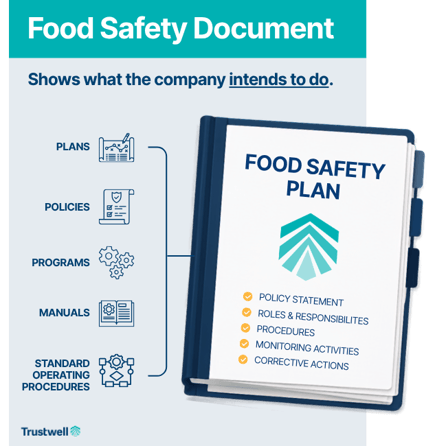
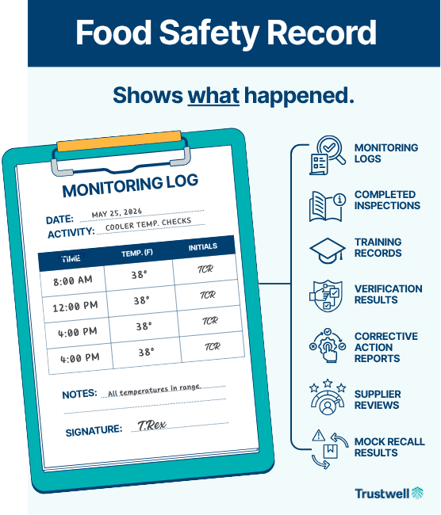 A sanitation procedure may say that an employee will inspect a production line after cleaning. The completed inspection form shows that the inspection occurred, who performed it, what they found, and how the company responded to any problems that were uncovered during the inspection.
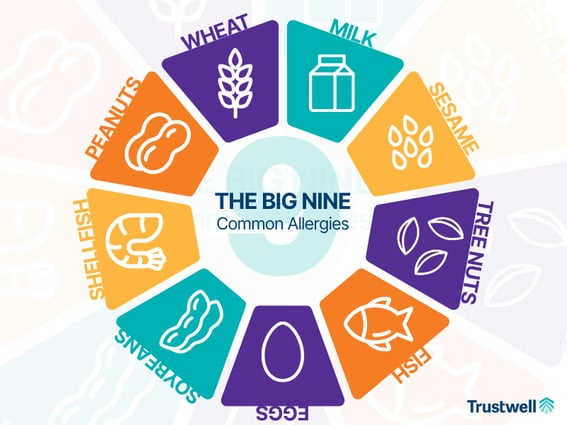 packaging, label approval, employee training, and incident response. Treating allergen management as the responsibility of one department can leave gaps between purchasing decisions, production practices, and label controls.